Dr. Gymbro
←

#rice protein

1 article
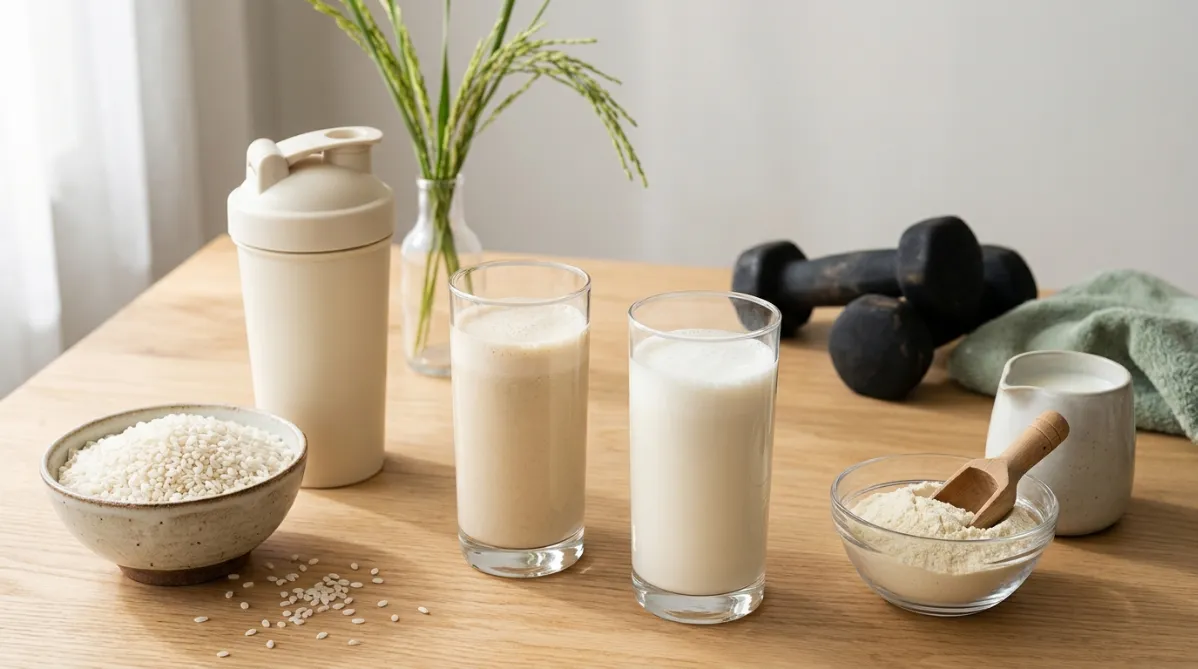
A bright, minimalist editorial still life on a pale oak table, shot from a slightly elevated three-quarter angle in soft natural window light. On the left sits a rustic ceramic bowl of uncooked short-grain white rice, with a few grains scattered across the wood. Beside it is a matte cream-colored shaker bottle. On the right is a small glass bowl of fine ivory whey powder with a wooden scoop resting in it, and a small pitcher of milk behind it. Two identical tall glasses of creamy, lightly frothed shake stand side by side in the center, one a touch warmer beige and the other a soft white. They suggest equal outcomes without any text or labels. A pair of worn black neoprene-coated dumbbells and a folded sage-green gym towel sit slightly out of focus in the background. A sprig of green rice stalks in a slim vase adds a fresh, natural accent.

The palette is warm neutrals: cream, oatmeal, soft sage, and muted terracotta, with gentle shadows and a shallow depth of field. The surface has subtle grain, and fine powder dust is caught in the light. The composition is clean and balanced, with generous negative space on the upper right for a headline overlay. The mood is calm, modern, and health-forward, like a contemporary nutrition magazine or wellness journal. Photorealistic, crisp detail, creamy bokeh, and a gentle matte film-like finish.
nutrition

48 g de protéine de riz égalent le lactosérum pour le muscle et la force en 8 semaines

BY DR. GYMBRO ·

Le riz est souvent jugé inférieur au lactosérum, mais une étude de 2013 menée chez des hommes entraînés a montré le contraire lorsqu’on utilise une forte dose. Chez 24 pratiquants de musculation, 48 g d’isolat de protéine de riz post‑entraînement ont généré les mêmes gains en masse maigre, épaisseur musculaire, force et puissance que 48 g d’isolat de lactosérum pendant huit semaines. Pourquoi le riz tient‑il la route ? Probablement grâce à une dose suffisante de leucine. Voici ce que révèle l’étude, ses limites et comment les adeptes de régimes végétariens ou intolérants au lait peuvent s’en servir.

This page is available in